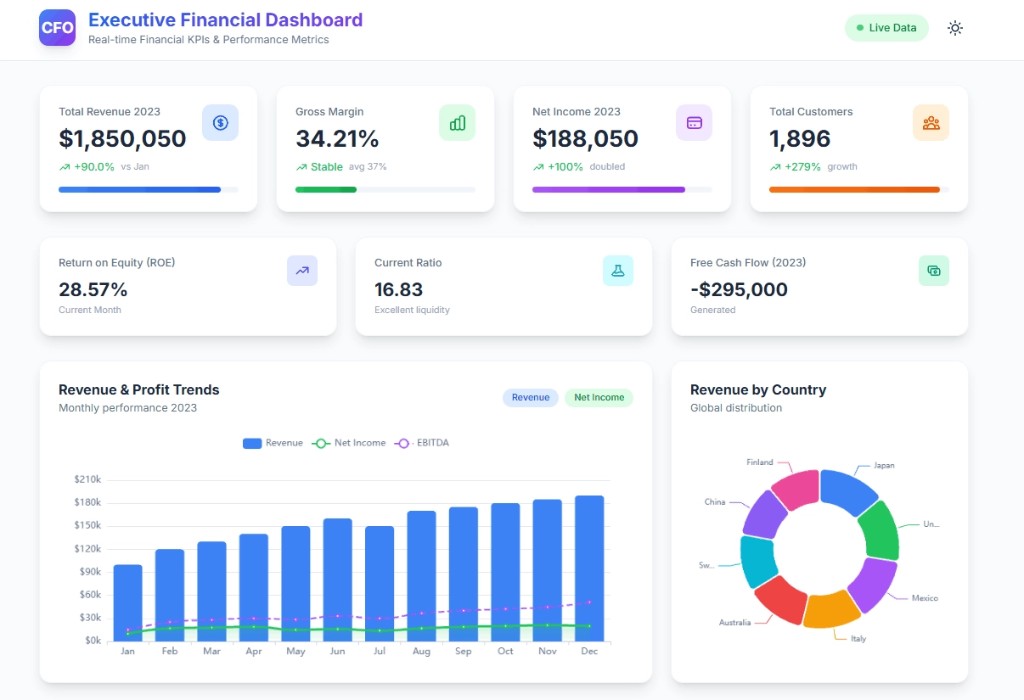
Many companies grow revenue while quietly losing margin quality. The root cause is rarely one dramatic mistake. It is usually small pricing decisions repeated at scale: inconsistent discounting, weak packaging logic, low-ROI custom terms, and poor visibility into deal economics.
AI gives leadership teams a practical advantage: it can continuously analyze pricing behavior across sales, contracts, and customer usage, then flag where margin is leaking before it becomes structural.
Where pricing leakage usually hides
Most pricing reviews happen monthly or quarterly, which is often too late. By the time patterns show up in finance reports, they are already embedded in pipeline and renewals.
AI can detect patterns such as:
- Discount drift by region, rep, segment, or product line
- Deals with high acquisition success but poor long-term gross margin
- Renewal terms that keep low-value pricing in place
- High-support accounts priced below service cost
This helps teams move from reactive price governance to proactive margin management.
AI + RevOps: a better operating model
The highest-performing teams combine AI analysis with clear commercial rules. The model is simple:
- Define guardrails: target discount ranges, minimum margin bands, approval thresholds.
- Monitor in near real time: AI highlights deals violating pricing policy or predicted to underperform on margin.
- Escalate with context: instead of blocking every exception, route only high-risk exceptions to decision owners.
- Close the loop: measure outcomes at renewal and feed results back into pricing rules.
The goal is not to slow sales teams down. The goal is to increase win quality while preserving speed.
A practical executive scorecard
If you want business outcomes, track these metrics weekly:
- Median discount by segment versus policy baseline
- Gross margin at close and at first renewal
- Exception rate by rep and deal size
- Customer profitability mix across new and expansion revenue
When these metrics are visible, pricing becomes an operating lever, not just a finance review topic.
Quick answers leaders ask about AI pricing optimization
Can AI improve pricing without hurting conversion?
Yes, when used for targeted intervention. AI should identify where price concessions do not materially increase win probability, so teams protect margin while keeping competitive flexibility where it matters.
What is the fastest starting point?
Start with one workflow: discount and exception governance on net-new deals. This creates immediate visibility and measurable impact in one quarter.
How do we prove ROI?
Measure gross margin improvement, reduced exception volume, and renewal margin stability against a pre-AI baseline. Improvement in these three indicators usually demonstrates clear financial return.
Final thought
AI should not be treated as a pricing tool in isolation. It is a decision layer that helps leadership teams protect margin quality as they scale.
Revenue growth is important. Profitable revenue growth is what compounds enterprise value. AI can help you protect that difference.
One clear email each Thursday
Actionable frameworks on AI execution, agents, and MCP. Join 4,200+ builders.
Leave a comment
Be the first to share your thoughts.